From Maquette to Monument:
J. Aaron Alderman on Sculpture, Storytelling, and Human Connection
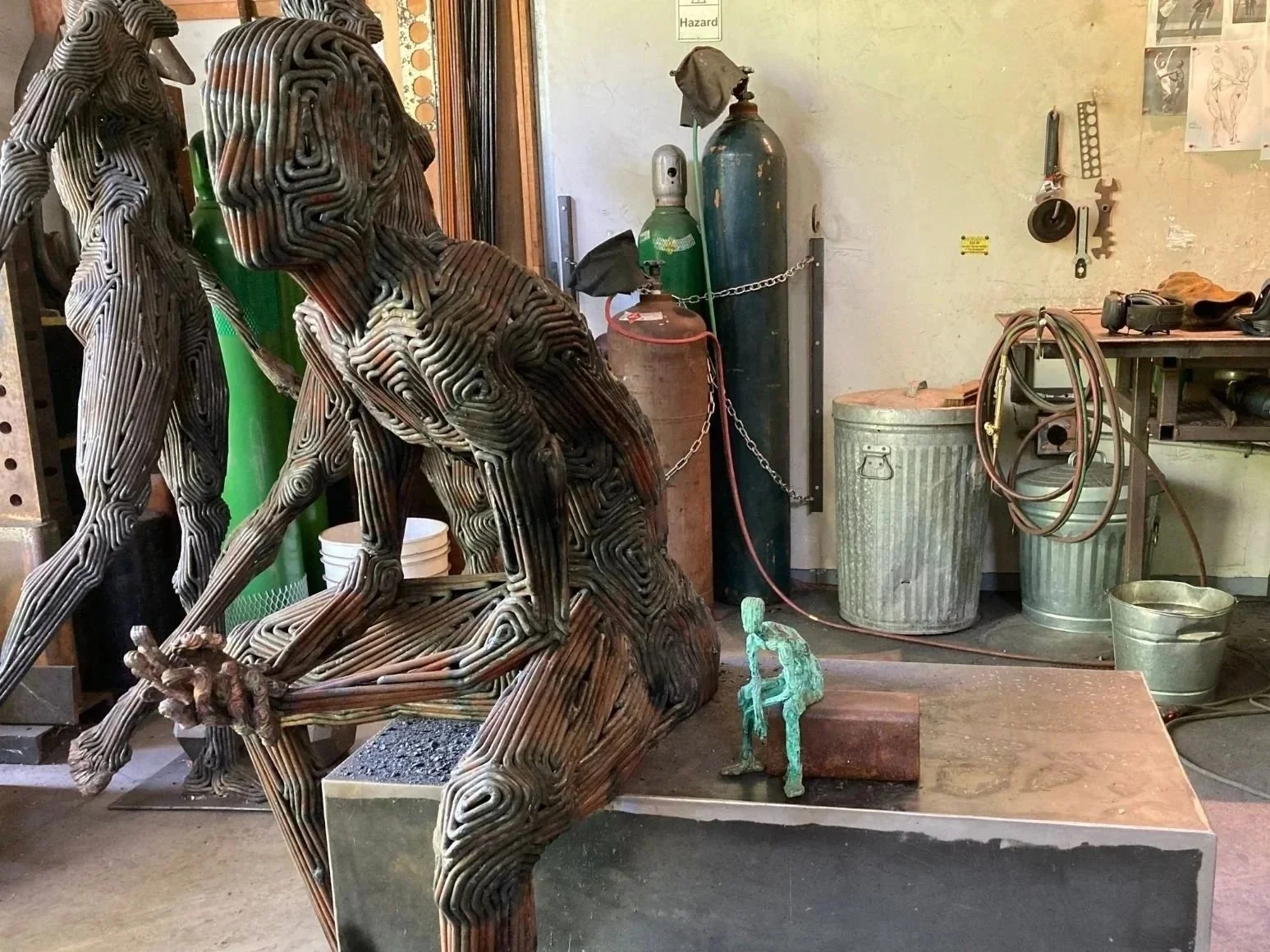
Visitors to Anvil Arts may recognize the figurative sculptures of J. Aaron Alderman, whose distinctive steel forms capture movement, emotion, and connection through remarkably simple lines.
What gallery visitors may not realize is that some of the small maquettes currently on display represent the early stages of a much larger story.
Aaron is currently working on a major public art commission for a new orthopedic hospital campus in Greeley, Colorado. When complete, the installation will include ten figurative sculptures and eight benches placed throughout the landscape. Later this month, he will travel to Colorado to install the first phase of the project.
While the finished work will span an entire campus, many of the ideas behind it began the same way Aaron begins most projects: by asking questions.
In this case, the questions centered on healthcare, community, and human connection.
Creating Space for Reflection
Hospitals are unique environments. They are places of healing, but also places of waiting, uncertainty, worry, and hope.
As Aaron developed his proposal, he found himself thinking about the experience of the people who would ultimately encounter the work—patients, families, visitors, and staff.
“I wanted to create these little environments where people could go and sit down and reflect and be present in the space.”
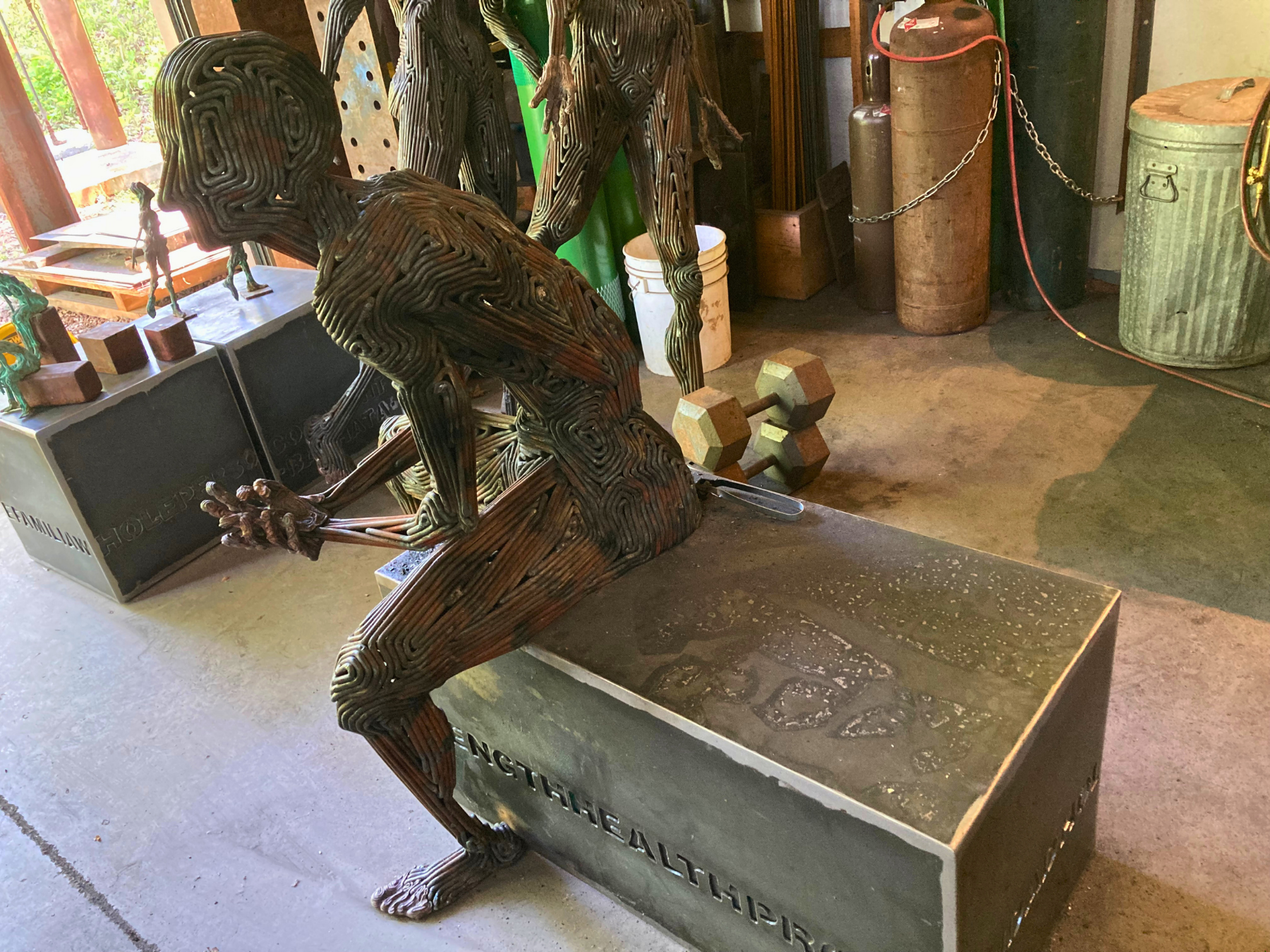
Rather than treating sculpture as something to be viewed from a distance, Aaron envisioned a series of spaces that would invite participation. Benches became just as important as the sculptures themselves, creating opportunities for visitors to pause, rest, and engage with the artwork in a more personal way.
The installation is designed not simply to decorate the landscape, but to contribute to the experience of being there.
Telling a Story Without Words
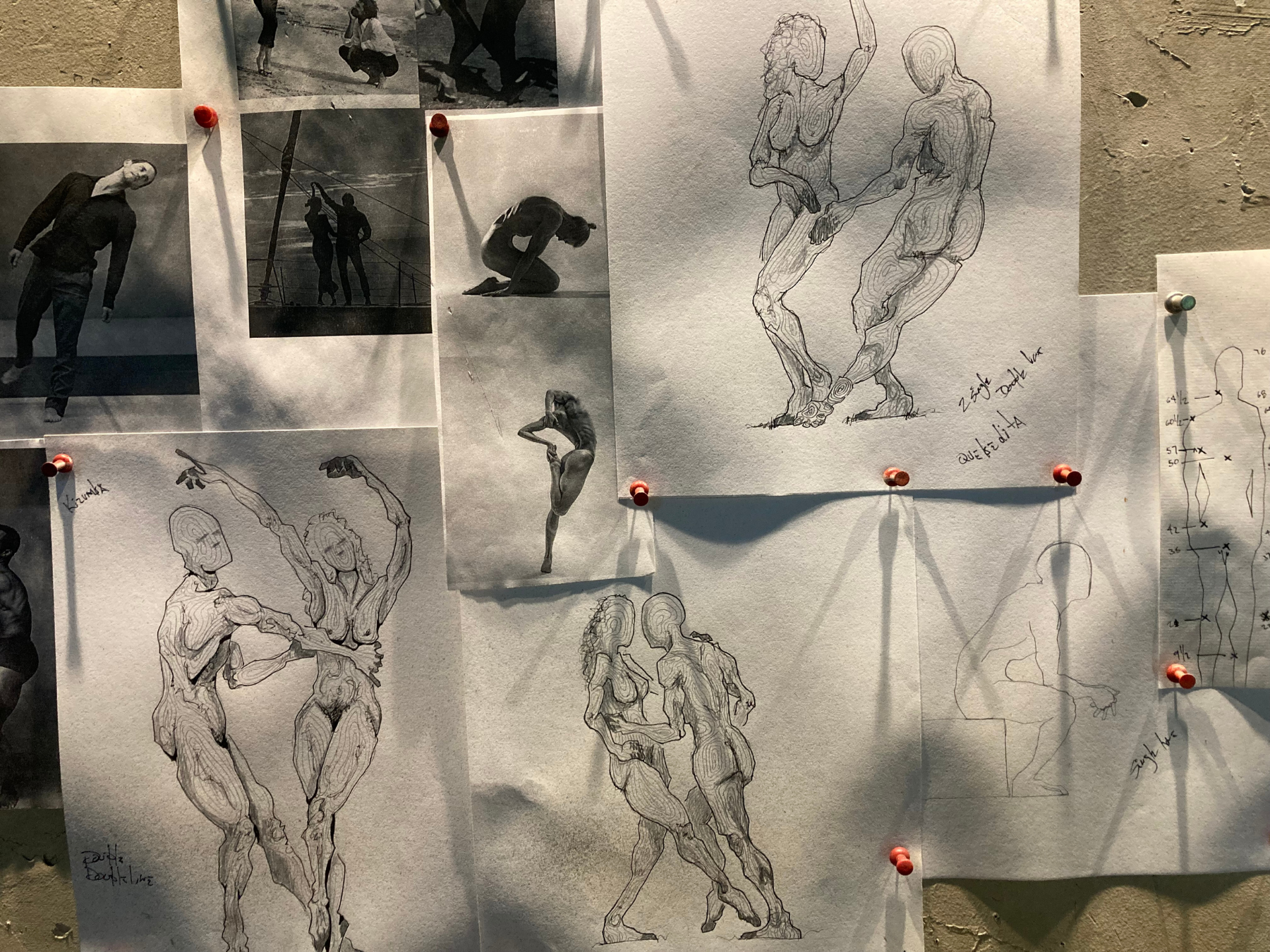
As part of his research, Aaron spent time learning about the communities the hospital serves, including many rural and Hispanic residents. In thinking about themes of connection and community, he became interested in the role social dance can play in bringing people together.
That idea eventually evolved into the narrative structure of the installation.
Rather than depicting a collection of unrelated figures, the project follows two people through a sequence of encounters. As visitors move through the campus, the figures gradually move from separation toward connection.
Aaron described the concept as a kind of visual storyline unfolding across the landscape.
The sculptures invite viewers to follow that progression while also becoming part of it themselves.
A visitor sitting on a bench beside one of the figures is no longer simply observing the work. They become part of the scene.
That relationship between artwork and audience became an important part of the project’s design.
Drawing in Space
The ideas behind Aaron’s work are thoughtful and complex, but his materials are surprisingly simple.
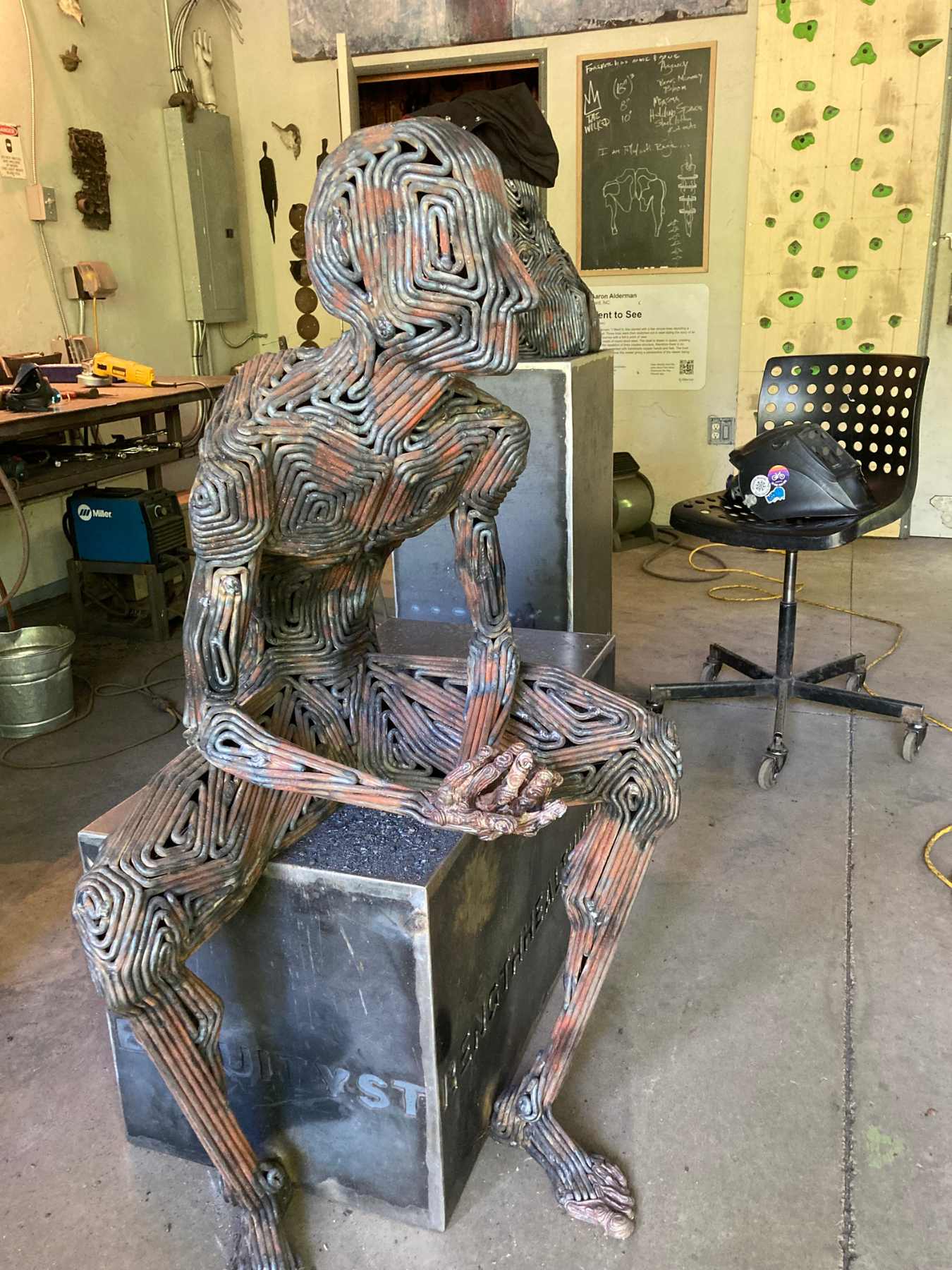
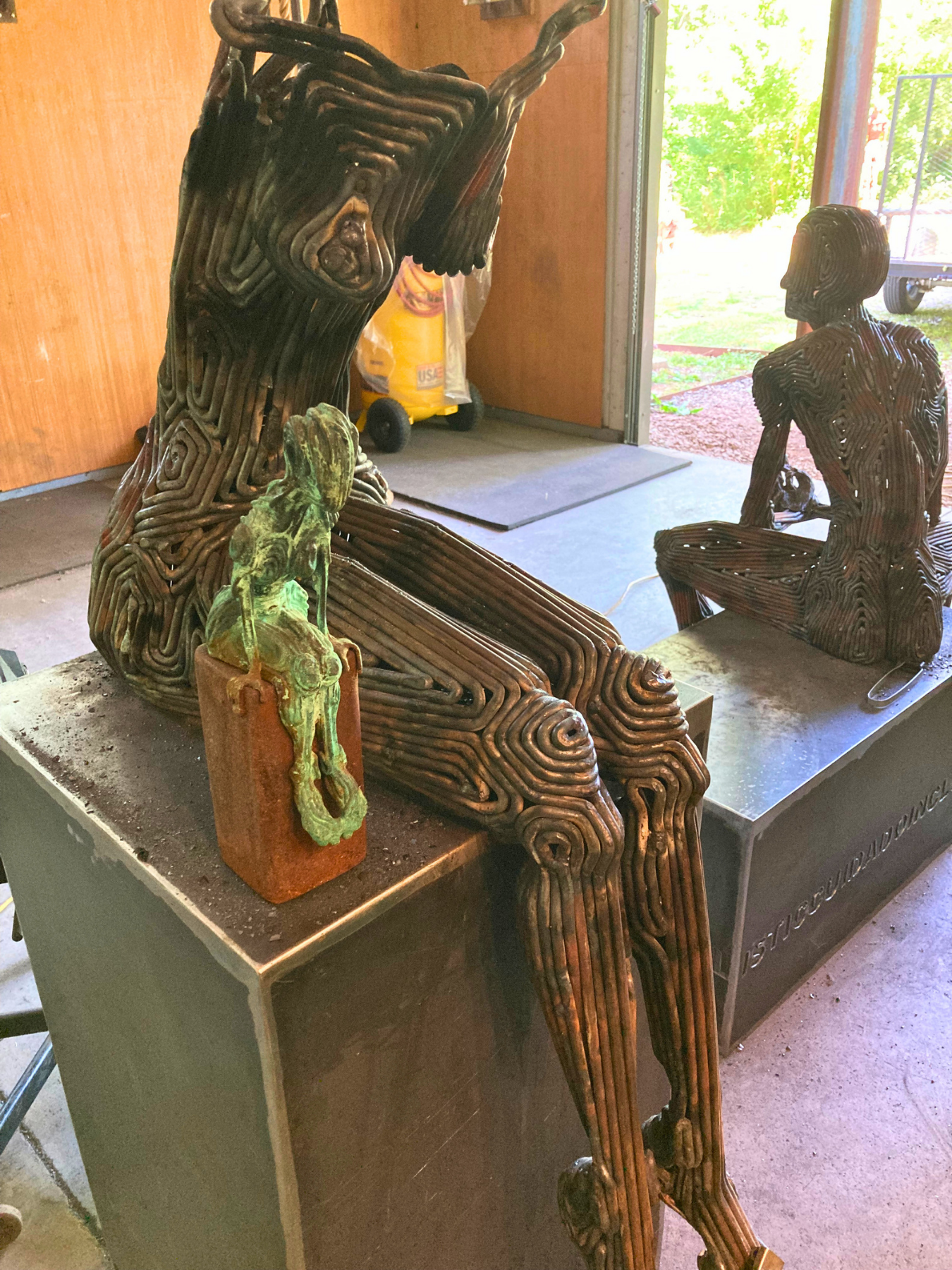
Working primarily with round stock steel, he builds his sculptures line by line through a process of heating, bending, and welding.
“I’ll literally cut out a footprint in steel and start drawing lines. It’s just heating, bending, welding, and repeating that process.”
Unlike many sculptors, Aaron does not build an internal armature and then cover it. The structure itself becomes the finished sculpture.
The result is work that feels both substantial and open. Individual lines describe posture, gesture, and movement while allowing light and space to remain part of the piece.
Visitors often ask whether he has a background in anatomy. While he credits years of observation, life drawing, and experience, much of his understanding comes from carefully studying how people move.
For this project, that research included watching dancers and physically recreating poses in the studio.
“I’ll squat down or sit down in the studio. I’ll kind of mimic the pose to think about how something’s going to twist or turn.”
For one seated figure, he even placed a bench in his studio and sat on it himself to better understand how the sculpture should occupy the space.
A Work in Progress
The Colorado installation is still taking shape.
The first four sculptures and four benches will be installed later this month, with additional elements to follow as the project progresses. Aaron is also one of four artists contributing work to the new campus and is looking forward to seeing how the completed environment comes together.
“It’s going to be cool once all this work’s installed. There’ll be at least two, if not three, other artists who’ll have their work in this complex and around this building.”
For visitors to Anvil Arts, the project offers a rare opportunity to see part of that creative journey while it is still unfolding. Several of Aaron’s maquettes and sculptures provide insight into the same process, ideas, and craftsmanship that inform his large-scale public commissions.
Whether working on an individual sculpture or a multi-year public art installation, Aaron returns to the same questions that inspired this project from the beginning: How do people connect with one another? How do they connect with a place? And how can sculpture help create space for those encounters to happen?