ARTIST HIGHLIGHT
A Window into the sculptor: bill brown
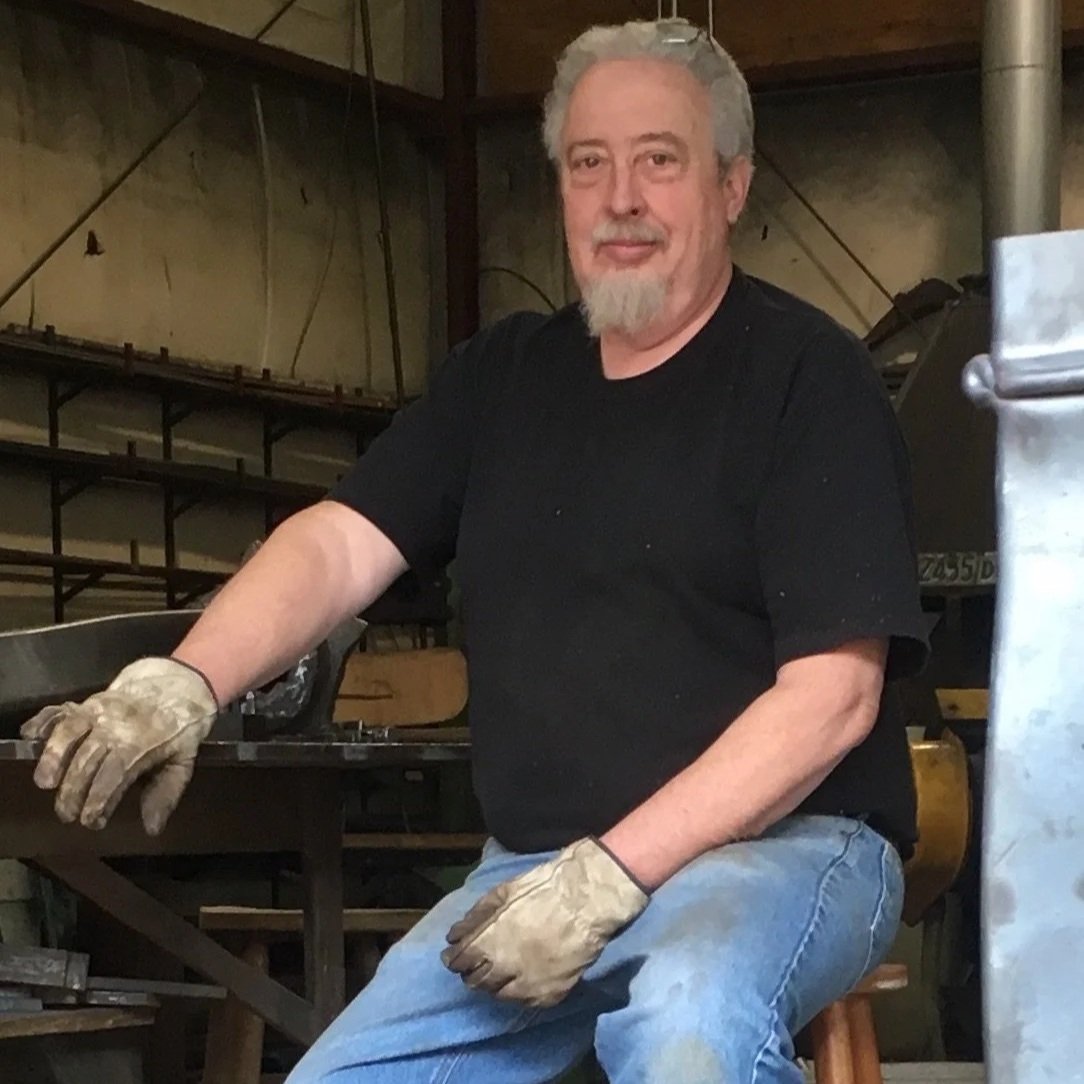
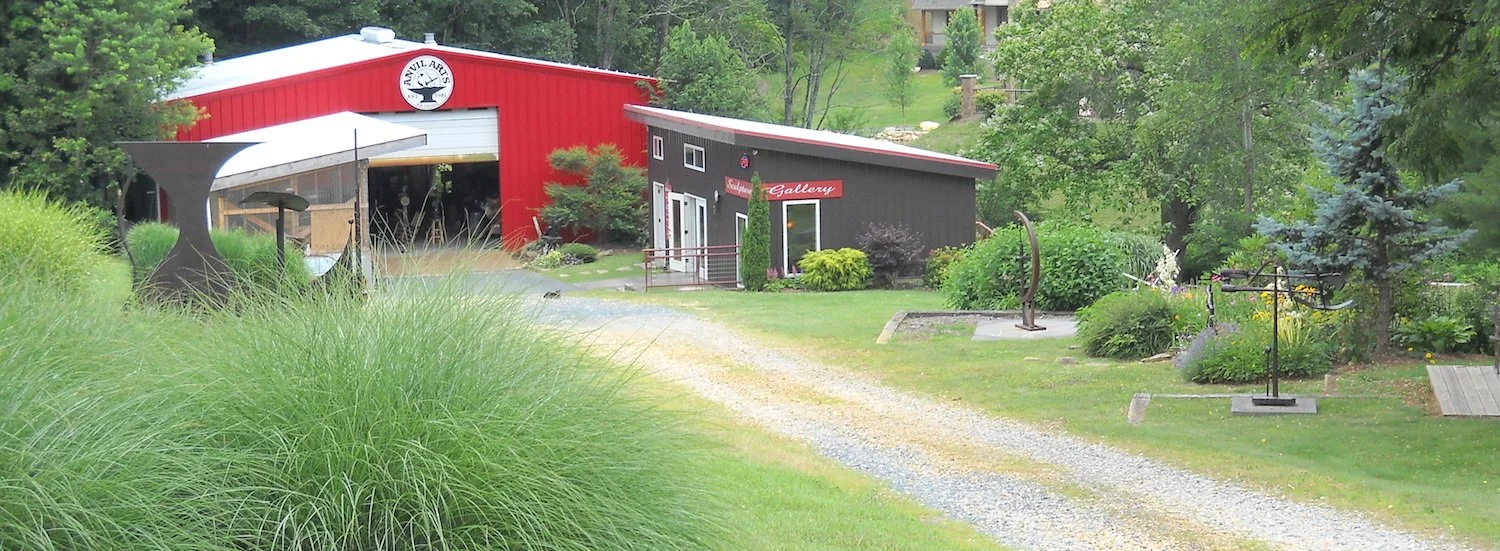
Bill Brown’s studio sits just off Highway 221 in Linville Falls, a steel-filled workshop and gallery that looks out over an acre and a half of sculpture. The space hums with the accumulated years of a working artist. Hammers, cranes, forges, paint, and half-formed ideas coexist in a place that has been home to Bill’s work for over four decades.
“I grew up at Penland School of Craft,” he says, looking back at the years that shaped him. “My dad was the director there and a sculptor himself, and my mother was a fiber artist to begin with. I didn’t know anything different. That was life.”
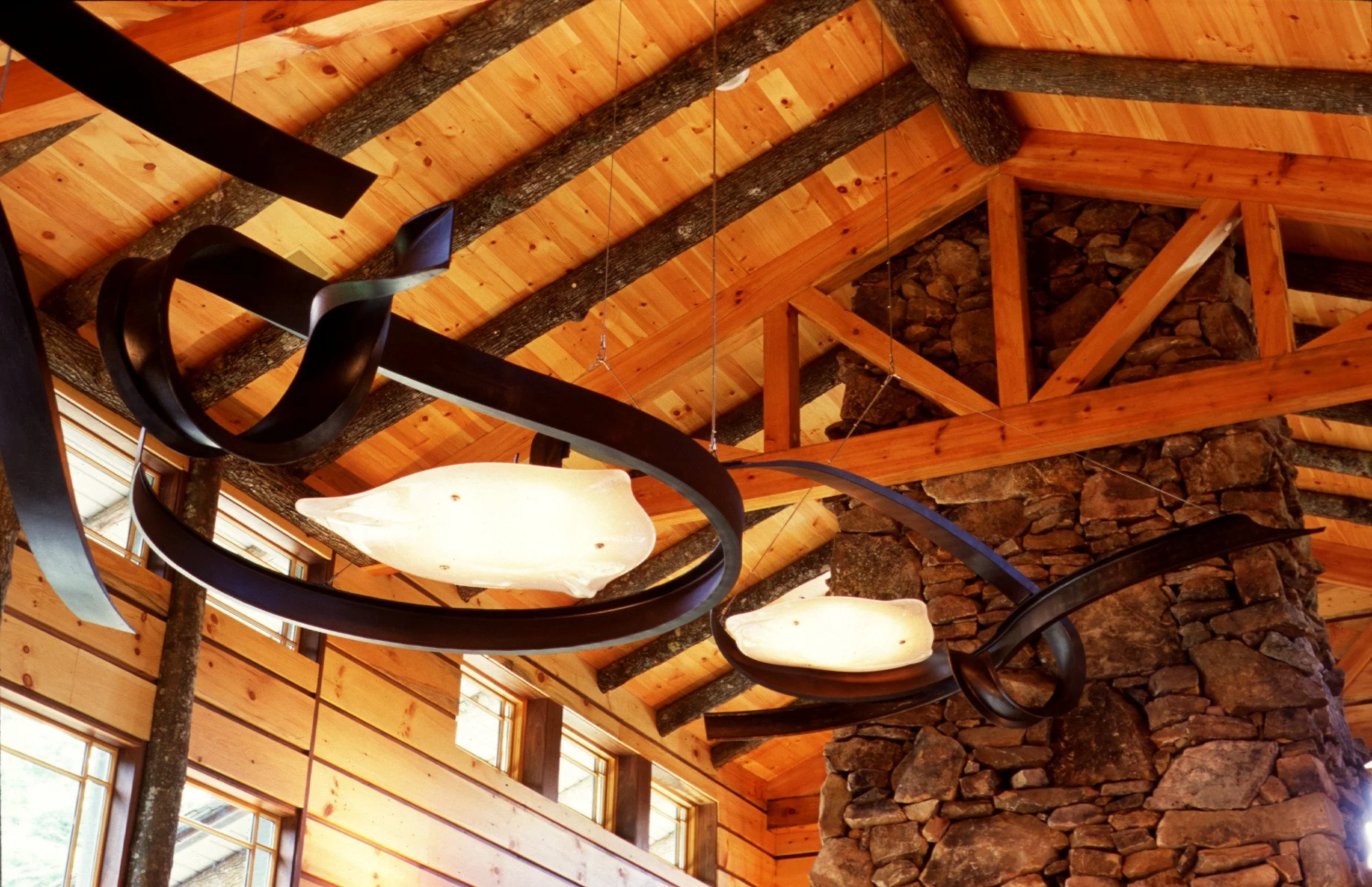
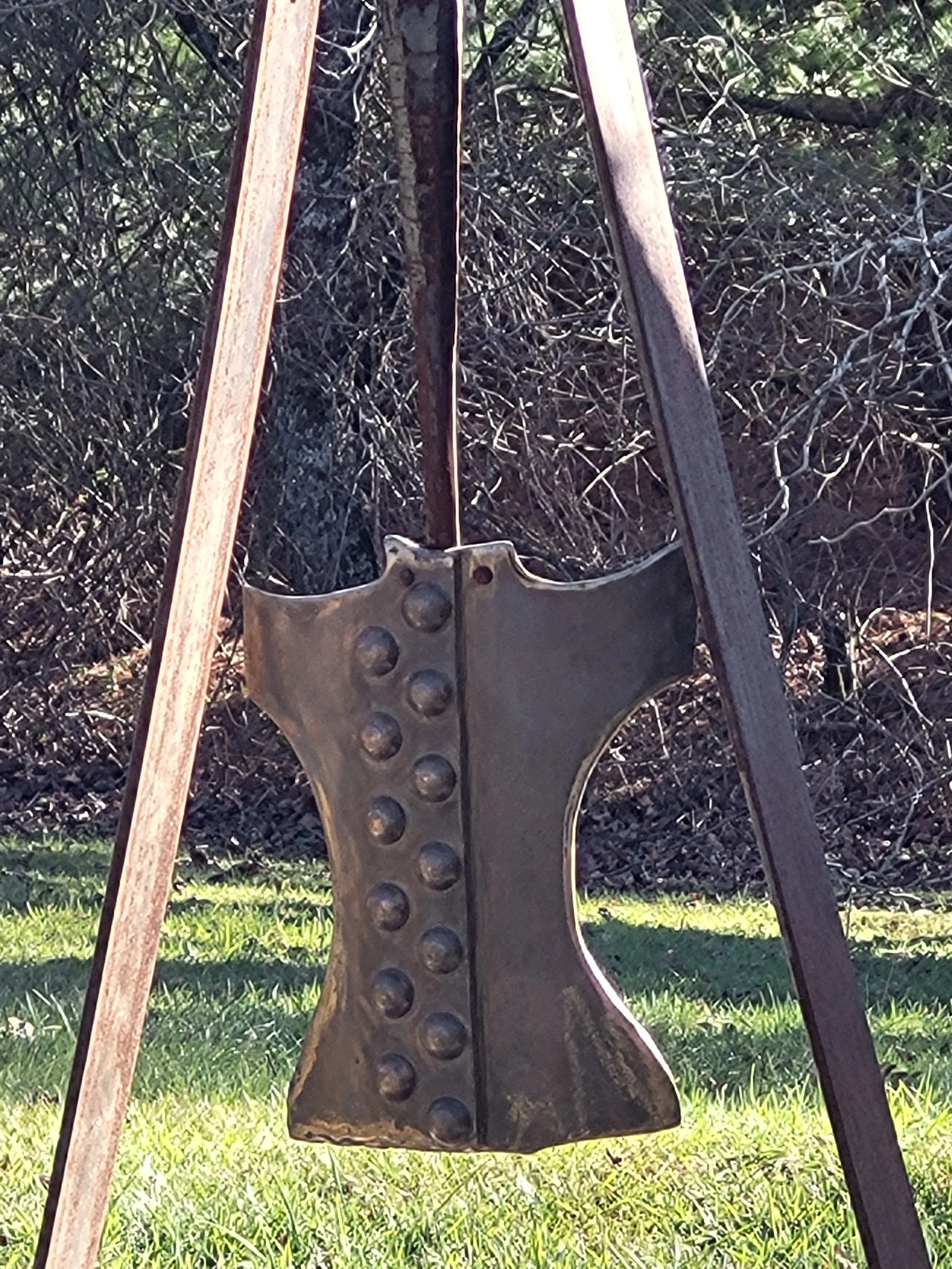
Glass and metal sculptural collaboration between Bill Brown and Rick Beck
Even with that early exposure, Bill didn’t plan on becoming an artist. He left Penland at sixteen, worked construction in Spruce Pine, and spent time shoeing horses. An injury during those years nudged him back toward metalwork. “We had to make our own horseshoes from scratch, so that was the first time I really worked with metal. Penland didn’t have blacksmithing then. I’d blown glass, worked in clay, but never done big metal.”
That interest led him to Savannah, where he apprenticed at Bailey Forge in 1976. After returning to North Carolina, he became Penland's first resident blacksmith. He received a National Endowment for the Arts grant in 1979. The connections he formed during that time helped him bring early instructors and guest artists when, a year later, he built Penland’s first blacksmithing teaching program. These early efforts laid the groundwork for what later grew into Penland’s well-known iron department.
In 1981 Bill opened his own studio, Anvil Arts Studio, Inc. For several years, he balanced traditional and architectural ironwork with an increasing passion for sculpture. “I remember the first sculpture piece I sold. Someone actually wanted something I enjoyed making. It sold for three hundred dollars, and that was a big thing. You wonder sometimes if anybody likes what you're doing. Maybe you shouldn’t worry about it."
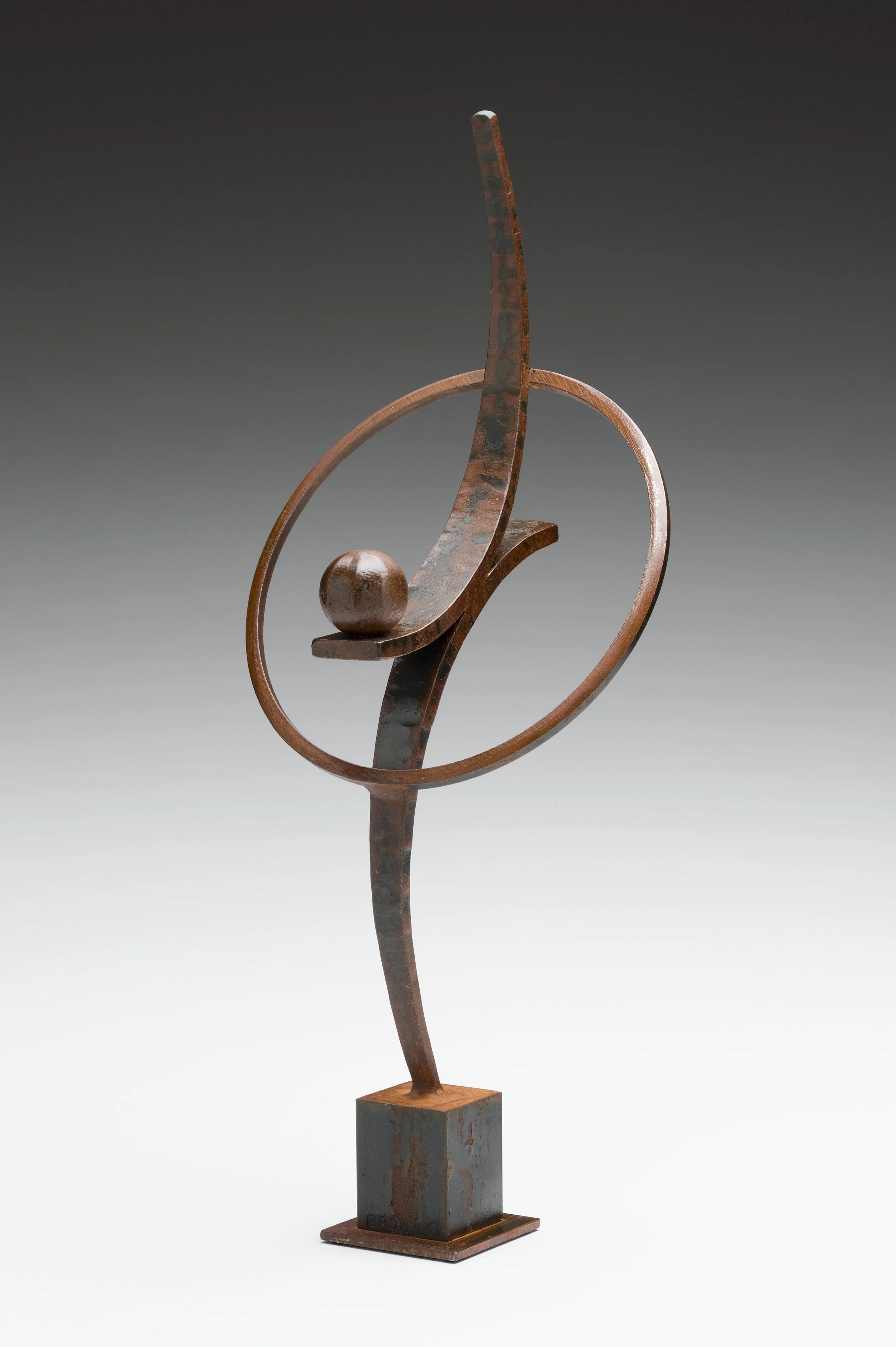
Bill’s sculpture is recognizable for its sense of motion, often appearing to twist, bend, or rise even while standing perfectly still. “I want the feel of action in three dimensions without the piece moving. It should feel alive, like it’s shifting right in front of you.”
Today his studio holds a mix of old and new tools: coal and gas forges, heavy air hammers, cranes, welders, and an anvil made by his good friend Russell Jaqua that he treasures. Large sculptures can sit unfinished for months or years while he waits for the right direction. “Some pieces need time. Medicine Dance sat in the shop for a couple of years before I found the rest of it.”
Bill works on series when he feels there is more to explore. One of his most well-known bodies of work, Bridges to Communication, began from personal experience and observation of division in daily life. “My feeling is that we ought to be able to cross a bridge of some kind, find movement in our thinking, and search for commonality. That was the idea behind those pieces.”
Medicine Dance, 12-foot tall steel and bronze sculpture
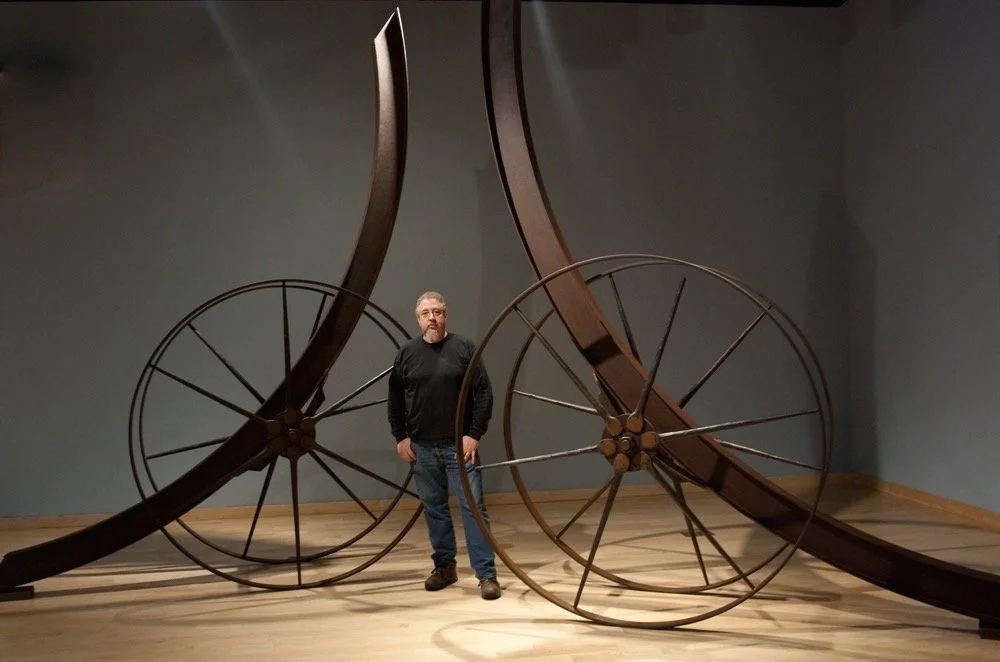
Bridges to Communication: Bill Brown with Fulcrum I & II
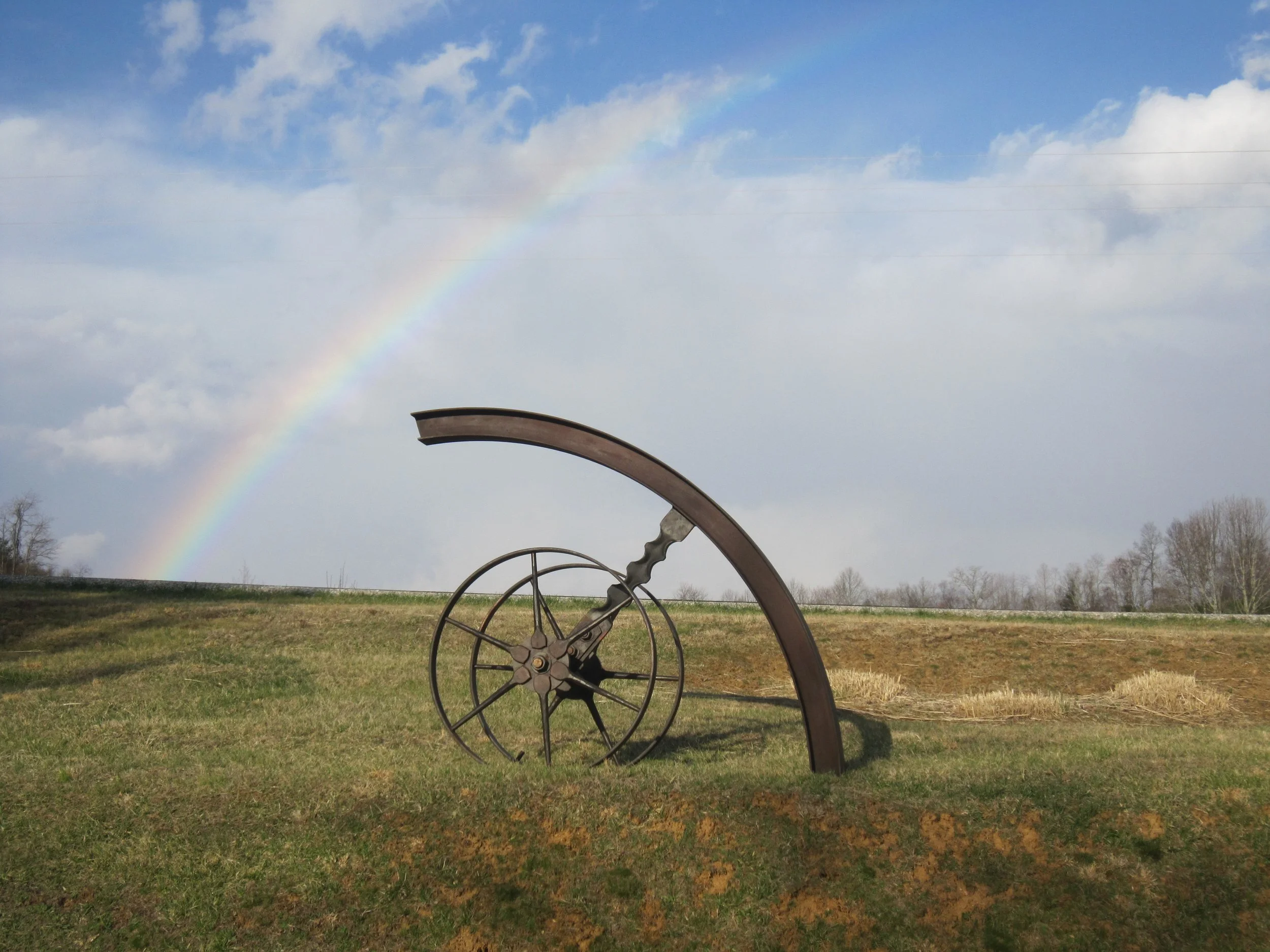
Bridges to Communication: Tipping Point
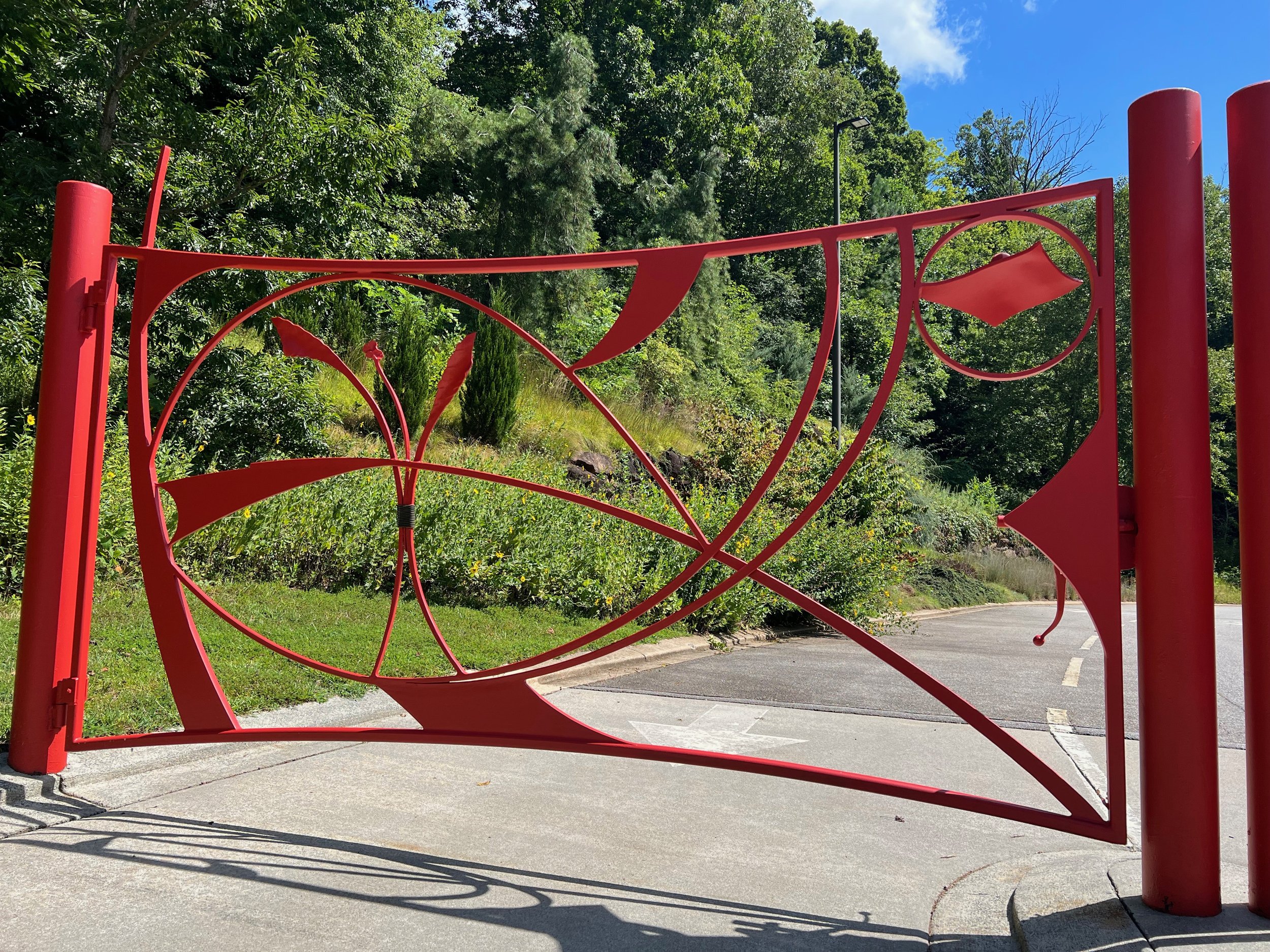
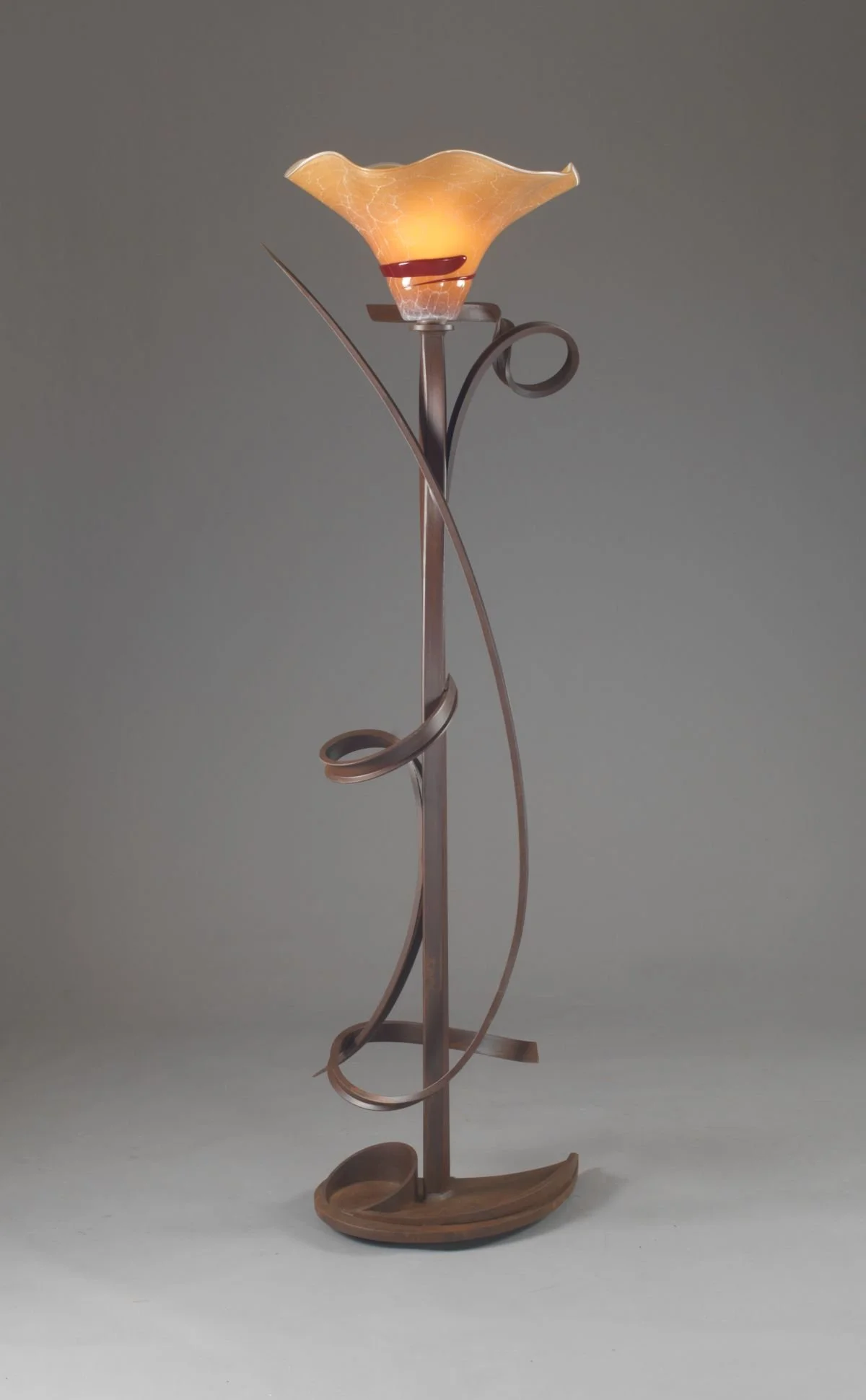
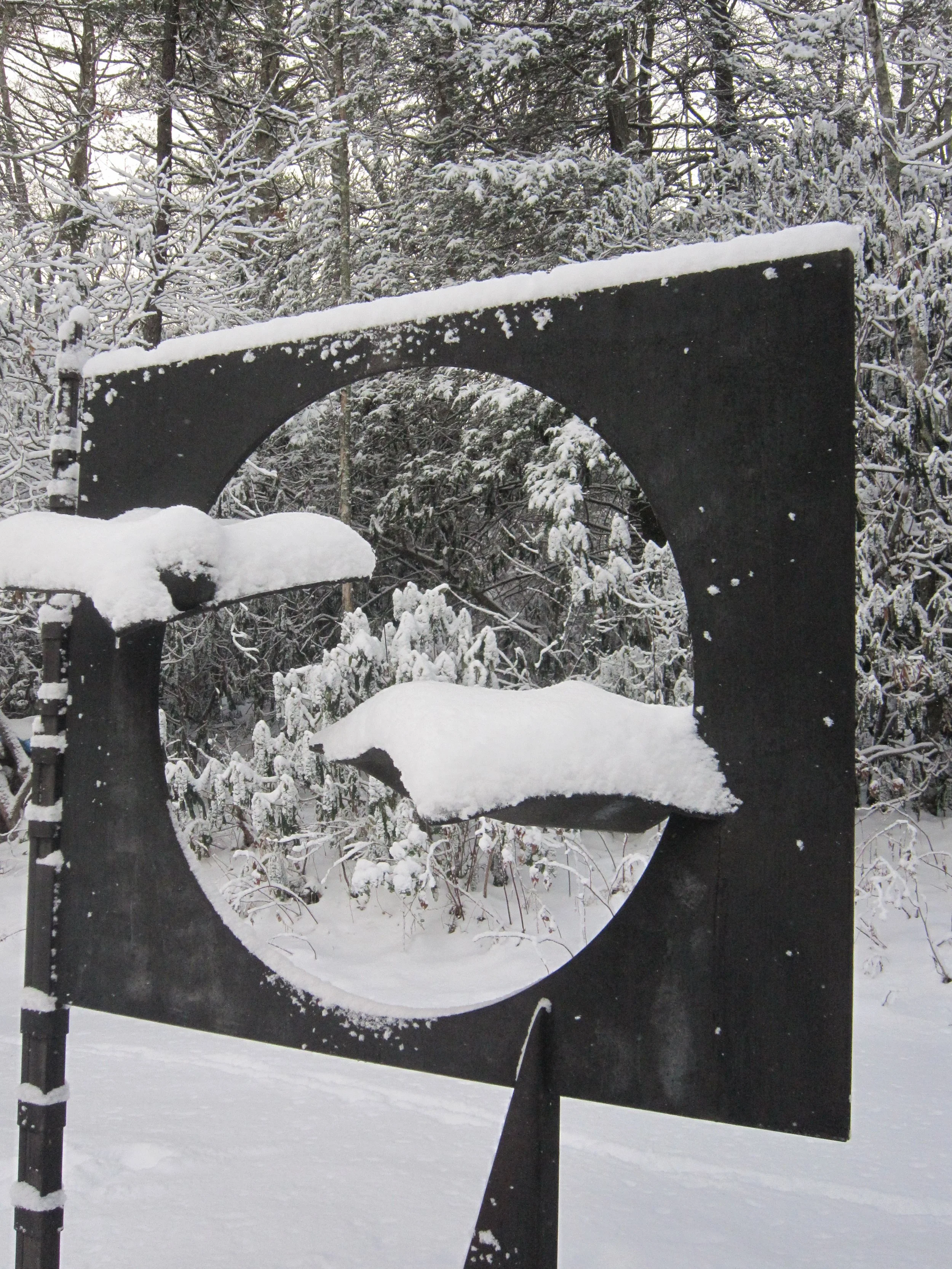
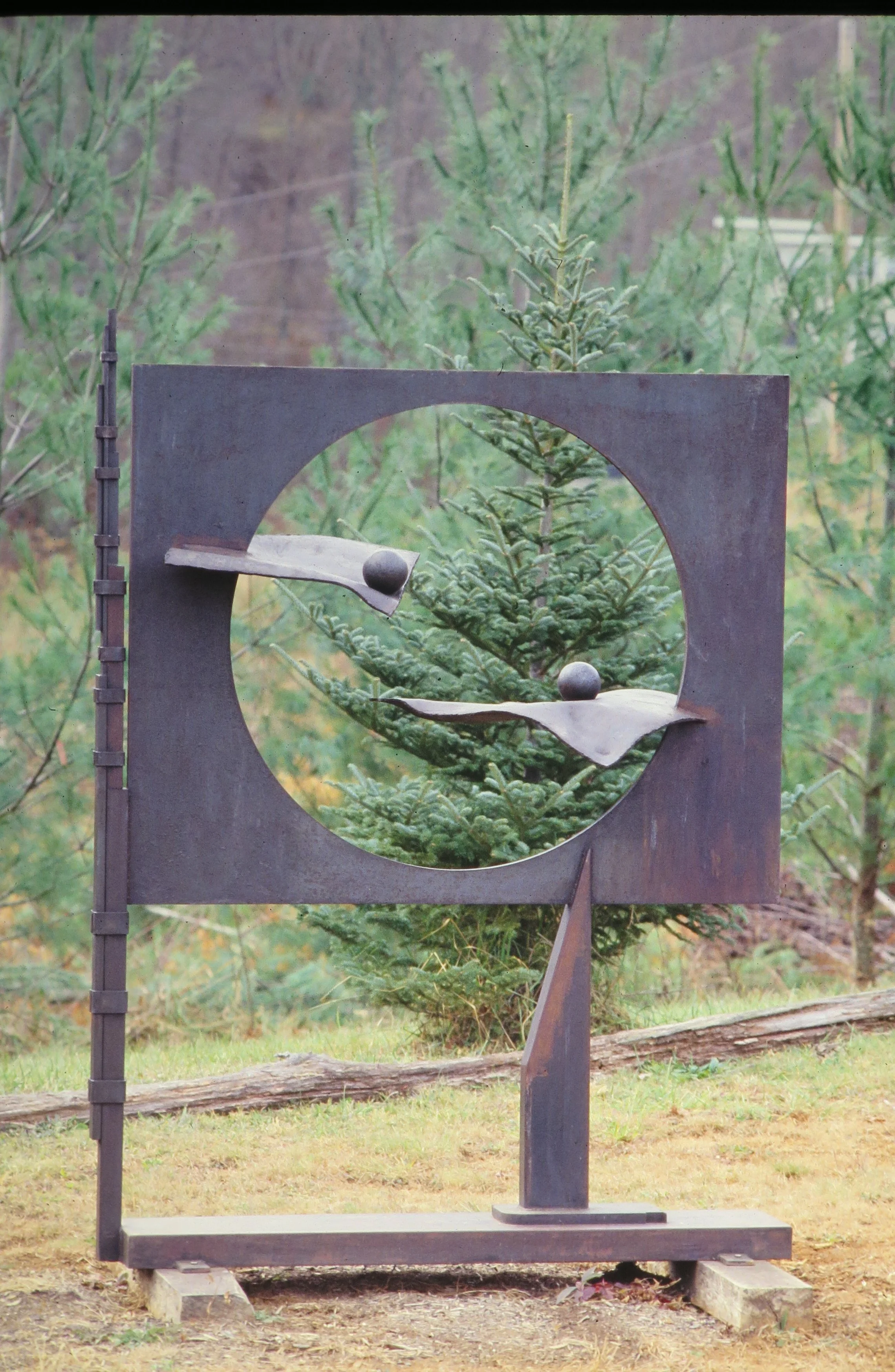
Other works draw from family stories, memories, or moments that have stayed with him. Gone Fishing captures a simple day shared with one of his children. Passage reflects on transition, with spheres moving cleanly through a single opening. His large-scale commissions include sculptural gates, lighting installations, and public artworks throughout the country, among them the entry gates for the North Carolina Arboretum and a major piece at the Library of Congress.
When asked about the challenges of choosing a creative life, Bill doesn’t hesitate. “You have to believe in yourself. Whatever it is you’re doing, stay at it. You have to believe in what you're doing and make it happen.”
Looking around the studio, it’s clear that belief is something he has practiced for a long time. Steel, paint, motion, and intuition meet in the work he creates here, grounded in decades of exploration and the simple conviction that art is worth making.
Visitors are always welcome at Anvil Arts Studio, which hosts the work of twenty sculptors and artists. The gallery and outdoor sculpture garden offer a chance to see Bill’s work in person and experience the scale, texture, and movement that shape each piece. Learn more and plan your visit.